Food Waste: Your Essential Guide to Reducing It at Home
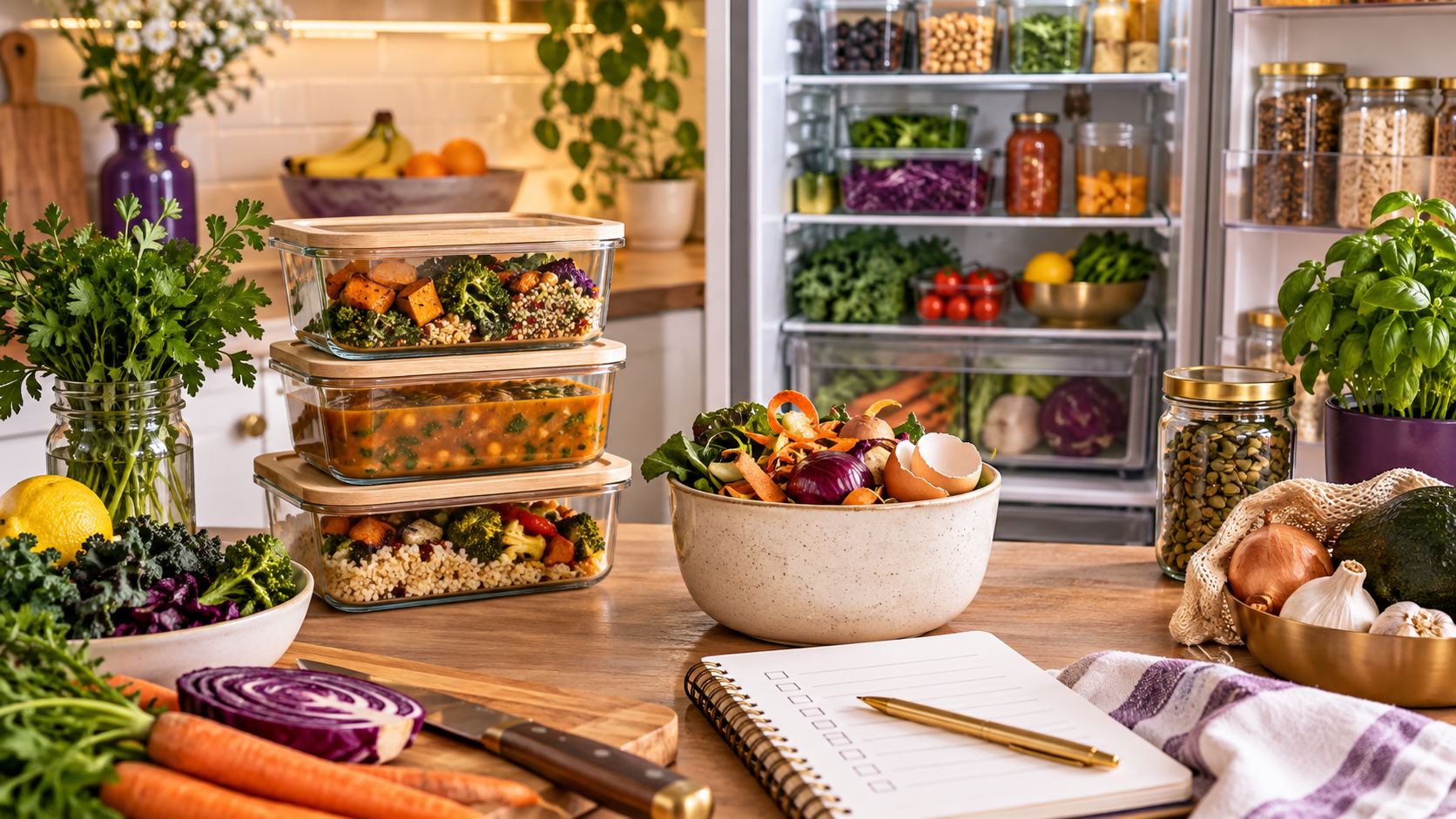
If you have ever tossed a container that was approaching its date, discarded vegetables that went limp, or thrown out a salad starting to brown at the edges, you are not alone. Food waste is a worldwide problem, and the United States is a major contributor. Food actually takes up more space in U.S. landfills than any other type of waste. Right here at home, up to 40 percent of the entire food supply goes to waste, which works out to almost 20 pounds of food per person every month.
There is a lot of unhelpful advice out there on this topic. I want to share the strategies that actually support your health while saving you time and money. But first, let's talk about why reducing food waste matters so much.
Benefits of Reducing Food Waste
The impact of food waste is wide-ranging. The less we waste, the more time and money we save, both of which feel especially precious right now. When farmers produce less food that ends up discarded, they use less fresh water, land, and fertilizer. Less waste also means less food that needs processing, transporting, and storing, often in unrecyclable packaging and energy-intensive refrigeration. And with less food in landfills, less greenhouse gas is produced. There are a few less obvious benefits too, which I will get into below.
Save time: Leftovers are not glamorous, but they let you cook once and eat twice. That means less time spent deciding what to make next and less time spent preparing or shopping for it.
Save money: The average American family of four wastes about $1,600 worth of produce every year. Imagine what you could do with that money by buying only what you actually need and plan to eat.
Save the environment: Reducing food waste means using land, water, fertilizer, packaging, and transportation more efficiently, since those resources go toward food that actually gets eaten. Throwing food away wastes the water and energy that went into producing and transporting it, and once it lands in a landfill, it releases greenhouse gases like carbon dioxide and methane. The EPA estimates that 95 percent of discarded food ends up in a landfill instead of being composted.
Boost your relationships and community: Sharing extra food with people you know builds relationships, and donating to a food bank or shelter helps strengthen food security for your wider community.
Strategies to Reduce Your Household Food Waste
Food is wasted at every stage, from farm to fork, but household waste is actually the largest single category, accounting for 43 percent of all food wasted, more than restaurants, grocery stores, and food service companies combined. That means what you do in your own kitchen genuinely moves the needle.
1. Freeze food and enjoy your leftovers. If you make or buy more than you can eat in a day, store it safely in a sealed container in the fridge or freezer rather than forcing yourself to finish it all at once. Pack up perishable food within one to two hours of it sitting at room temperature. Leftovers also save you time and money on busy days, since pulling a meal from the freezer beats starting from scratch.
2. Know your dates. A lot of food gets thrown out simply because people assume it has spoiled. The FDA now recommends "best if used by" to describe quality rather than safety. A food may not taste or perform exactly as expected past that date, but it is often still safe if it was stored properly. "Expires on" is mostly reserved for infant formula, which should not be used past that date.
3. Try imperfect or ugly produce. Perfectly good food sometimes gets discarded simply because it does not look flawless. Seeking out imperfect produce, or produce approaching its best-by date, is an easy way to save money and reduce waste. Many stores sell these at a discount, and they work beautifully in smoothies, soups, and baking. Just check that the produce is still edible, and prioritize eating or freezing it first.
4. Share extra food. If someone you know would appreciate a meal or your leftovers, invite them over or drop food off. You can also find a local food bank or shelter and donate what they accept. If you want to go further, consider donating the money you saved from wasting less food to that same organization.
5. Optimize your fridge and freezer. Check regularly for food that is nearing the end of its useful life and eat it first. Keep your fridge at a maximum of 40 degrees Fahrenheit and your freezer at 0 degrees or lower to extend freshness.
6. Compost whenever you can. The EPA estimates only 4.1 percent of wasted food gets composted, which means this is a huge area of opportunity. If you have the space for a backyard compost system, start there. If your city offers a composting program, use it instead of sending food waste to the landfill.
7. Use a grocery list and meal plan. Planning your meals and sticking to your list means you buy only what you need and will realistically eat that week.
How Meal Planning Helps Reduce Food Waste
Having a plan for your meals, whether you build it yourself or use one designed for you, is one of the most effective ways to cut food waste. When your meals are planned, your grocery list follows from that plan. Check your pantry, fridge, and freezer before adding anything to the list, then stick to the list once you are shopping.
This approach reduces waste at the source, and according to the EPA, source reduction is the single most impactful step you can take. Meal planning also supports meaningful, sustainable change beyond your grocery bill. A study published in the Annals of Behavioral Medicine found that people in a weight management program who planned more of their meals achieved greater progress than those who planned fewer.
Final Thoughts
Reducing food waste saves time and money, lowers our impact on the planet, and strengthens our relationships and communities. It is a genuine win, win, win.
One of the best places to start is with a meal plan, since it shapes your grocery list and keeps excess food out of your cart in the first place. Not everyone has the time or interest to build their own plan, and if that is you, I would love to help.

Written by
Dr. Naija, Doctor of Functional Medicine, PhD
Dr. Naija is a Doctor of Functional Medicine, Board-Certified Holistic Nutritionist, Certified Herbalist, and chef with more than 20 years of culinary expertise. She is the founder of The Naija Goddess Center for Culinary Medicine, where she connects functional health insight with practical food and lifestyle strategy.
Ready to Bring Strategy Into Your Kitchen?
Explore culinary medicine consultations, kitchen resets, and practical meal frameworks designed around your life.