Your Nervous System Is Not Broken. It Is Just Still Running an Old Program.
Episode 37 of Informed Choice with The Naija Goddess, featuring Kathryn Regganie
By The Naija Goddess
Doctor of Functional Medicine, PhD | Featuring Kathryn Regganie
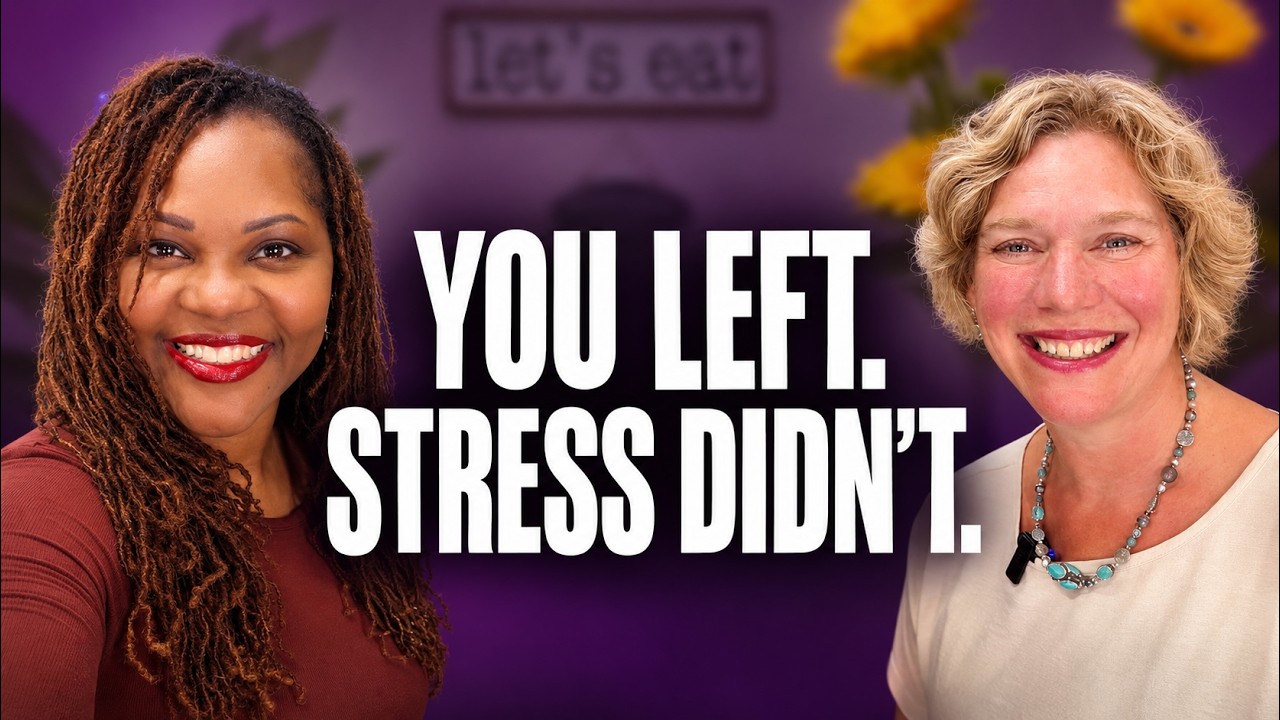
I have been in rooms with women who have done everything. They cleaned up their diet. They started therapy. They left the job, left the relationship, or both. They are sleeping better, exercising more, doing all the things the wellness world told them to do. And they still feel like something is off.
Not dramatic. Not in crisis. Just persistently, quietly not quite right.
As a Doctor of Functional Medicine, a chef who has owned two restaurants, and a board-certified nutritionist, I have been in enough of those conversations to know that what most of these women are missing is not another supplement or another protocol. What they are missing is the understanding that the body does not move on just because the mind does.
That was the center of everything we talked about in this episode of Informed Choice. My guest was Kathryn Regganie, a Reiki Master teacher, certified CranioSacral therapist, licensed massage therapist, and the creator of the Drama Dragons framework. What she brought to this conversation was something I want every woman who listens to this show to hear at least once clearly: leaving the environment is not the same as leaving the pattern.
Watch the Full Conversation
Episode 37 with Kathryn Regganie is streaming on the Informed Choice playlist.
The Body Keeps Score and It Does Not Grade on a Curve
Kathryn spent over two decades in corporate America before she started studying energy healing, CranioSacral therapy, and massage. She was not someone who left a comfortable career to go find herself. She left because she was running herself into the ground and the people around her noticed before she did. A colleague told her she was going to make herself sick if she did not start eating. That was her wake-up call.
What I found compelling about her story is that it mirrors what I see clinically all the time. High-achieving women who are excelling by every external measure while quietly depleting themselves from the inside. Not because they are weak. Because they are wired for endurance, which is a strength that becomes dangerous when there is never a signal to stop.
Here is the clinical piece that matters: when the nervous system stays in a state of chronic low-grade activation, when the threat never fully lifts, the HPA axis, which is the body's central command system for the stress response, does not return to baseline. A Frontiers in Neuroscience paper confirms that prolonged HPA axis activation produces lasting changes in the neural circuits that regulate fear and stress. Meaning the nervous system learns to stay braced. Your body does not know the meeting has ended. It has just been taught to stay ready.
This is why a woman can leave a toxic job, move cities, rebuild her life, and still wake up tense for no reason she can name. The pattern did not stay at the old job. She carried it with her. Her body was never told the emergency was over.
What a CranioSacral Therapist Feels When She Touches a Stressed Body
This is where Kathryn's work gets specific in a way that I find genuinely fascinating, even from a clinical lens.
CranioSacral therapy works with the meningeal system, the membrane that surrounds the brain, runs down the spinal cord, and attaches at the sacrum. That is where the cerebrospinal fluid flows. When the body is in chronic tension, that fluid cannot move freely. The nerve endings are not getting what they need. And the whole system starts to lose its rhythm.
What Kathryn can feel, with a very light touch, is exactly that disruption in rhythm. She can sense where the restrictions are, where the flow has slowed or stopped, where the body is holding. And through a process she calls the still point, she invites the system to pause and reset, the same way you would kink a hose and release it to restore pressure.
What struck me most in our conversation was when she described what happens when something gets stored in the tissues. She called them energy cysts. Your shoulder might be holding the memory of being pushed off a bike at age five, an incident you have not thought about in forty years. Your body remembered it. Your mind moved on. And that is the gap that so much of conventional care never closes.
This is why I always say we need diversified healthcare teams. A functional medicine doctor, a medical doctor, a naturopath: none of us learned about still points in school. None of us trained in CranioSacral. Our disciplines do not overlap the way they need to for full-body healing. Kathryn can do something in the tissue that I cannot do, and I can do something with food and nutrition that she is not trained in. That is not a limitation. That is a reason to build a team.
She also said something about what happens for her female clients specifically that I want to sit with for a second. She said the pelvis is where women hold power. And when there is sexual trauma, reproductive trauma, or deeply suppressed emotion, it lands there. Clinically, I have seen this. I have not met a woman with fibroids or endometriosis who, when you actually dig in, does not have some unresolved emotional component. The body is not making things up. It is storing what we were not allowed to feel when it happened.
The Drama Dragons
Kathryn created a framework she calls the Drama Dragons, five archetypal stress patterns that show up in women under sustained pressure. And what I appreciated about this is that she did not frame them as character flaws. She framed them as protectors. They are doing a job. The question is whether that job still serves you.
The Fire Dragon runs hot, gets things done, and leads with intensity. When stressed, she shows up as frustration or anger. The Stoic Dragon stays silent, makes sure everyone else is okay, and says nothing about her own state. The Five-Headed Dragon does everything at once, multitasks beyond capacity, and gets frustrated when the balls start dropping. The Ice Dragon goes cold, disconnects strategically, works quietly in the background, and waits for someone to notice. The Smoke Dragon smolders, not quite as explosive as the Fire Dragon, but always simmering underneath.
Most of us have had all of them at different points. The one that comes out depends on the situation and the season. What matters is recognizing which dragon is running the show so you can stop and ask: is this a protection response or is this the best decision I can make right now?
The Pregnenolone Steal: Why Your Hormones Are Not Betraying You
Here is the clinical layer I added in this episode that I want every woman in her late thirties or forties to hear.
When the nervous system stays in chronic low-grade stress, the body prioritizes cortisol production. It does that by drawing from the same hormonal precursors that make estrogen and progesterone. This process is called the pregnenolone steal. A 2016 review in the Journal of Molecular and Genetic Medicine examined how chronic cortisol elevation consistently depletes progesterone availability.
The fatigue. The disrupted sleep. The anxiety. The irregular cycles. These are not inevitable parts of aging. They are frequently the measurable output of a nervous system that has been in emergency mode for too long, borrowing from the wrong account to keep running.
This is why I push back when women are told their symptoms are just perimenopause or just getting older. Your grandmother was not having these symptoms because she was eating real food, had less toxic load in her environment, and her nervous system was not being hammered by 24-hour news cycles, back-to-back video calls, and the cultural mandate to hold everything together while pretending it is effortless.
It is not just aging. It is years of unresolved activation catching up to your hormones.
Lemon Balm: The Herb That Talks to Your Nervous System Directly
The herb I chose for this episode is lemon balm, Melissa officinalis. North African and Mediterranean traditional medicine has used it for centuries as the primary remedy for nervous tension and stress-induced digestive upset. It is also documented in European herbalism going back to ancient Greece, where it was cultivated in monastery gardens.
The name Melissa comes from the Greek word for honeybee, because lemon balm was historically the primary nectar source for bees in that region. I find that detail meaningful. The plants that feed the most necessary pollinators tend to also be the most useful medicines.
Its active compound is rosmarinic acid, which inhibits GABA-T, the enzyme responsible for breaking down GABA in the brain. GABA is the primary inhibitory neurotransmitter in the central nervous system, the brain's chemical off switch. When GABA is elevated, the brain is less reactive, less locked in high alert. A randomized placebo-controlled study cited in Psychosomatic Medicine found that lemon balm extract significantly reduced stress-induced cortisol responses compared to placebo, alongside improved self-reported calmness and cognitive clarity.
In vitro studies from the International Journal of Clinical Pharmacology confirmed the GABA-T inhibition mechanism. This is not just centuries of anecdote. The mechanism is understood and it has been studied.
On the show, we cooked with it. We made a Golden Chickpea Bowl with a Lemon Herb Drizzle, a lemon balm, parsley, garlic, and avocado sauce over crispy spiced chickpeas on a quinoa grain base with cherry tomatoes and spinach. The chickpeas are not just there for texture. Chickpeas are one of the highest plant sources of tryptophan, a precursor to serotonin, one of the first neurotransmitters depleted when the body has been in chronic stress for too long. The dish was medicine on a plate, built to match the conversation we had all episode.
Lemon balm is generally well tolerated. If you have a thyroid condition like Hashimoto's, or if you are taking active sedatives, talk to your healthcare team before adding it. In culinary amounts, it is very safe regardless of what you may be taking.
The Part That Stayed With Me
Near the end of our conversation, Kathryn was asked what she tells someone who has tried everything and still feels off. What she said was this: sometimes the nervous system is so exhausted from running on high for so long that the body barely registers what you are doing to help it. You sit down and you think you are resting, but your shoulders are up to your ears and your nervous system is still firing. You do not even know you are doing it anymore.
That is the part women miss. Not the big events. The constant low hum of being ready. Being available. Being the one who holds it together. The body does not distinguish between a real threat and the one you are anticipating. It just stays braced.
The one thing you can do right now, as Kathryn said on air, is stop. Take a real breath. Feel the weight of your body. Let your nervous system learn, maybe for the first time today, that you are not in danger. You are allowed to land.
That is the informed choice for this episode.
Connect with Kathryn Regganie:
Find Kathryn Regganie at energy-pathways.com and on LinkedIn.
Heal naturally. Live vibrantly.
Dr. Naija, The Naija Goddess
Doctor of Functional Medicine, PhD | www.TheNaijaGoddess.com